

Gene Simmons Band Plays KISS Classics at Fantasy Springs Resort Casino
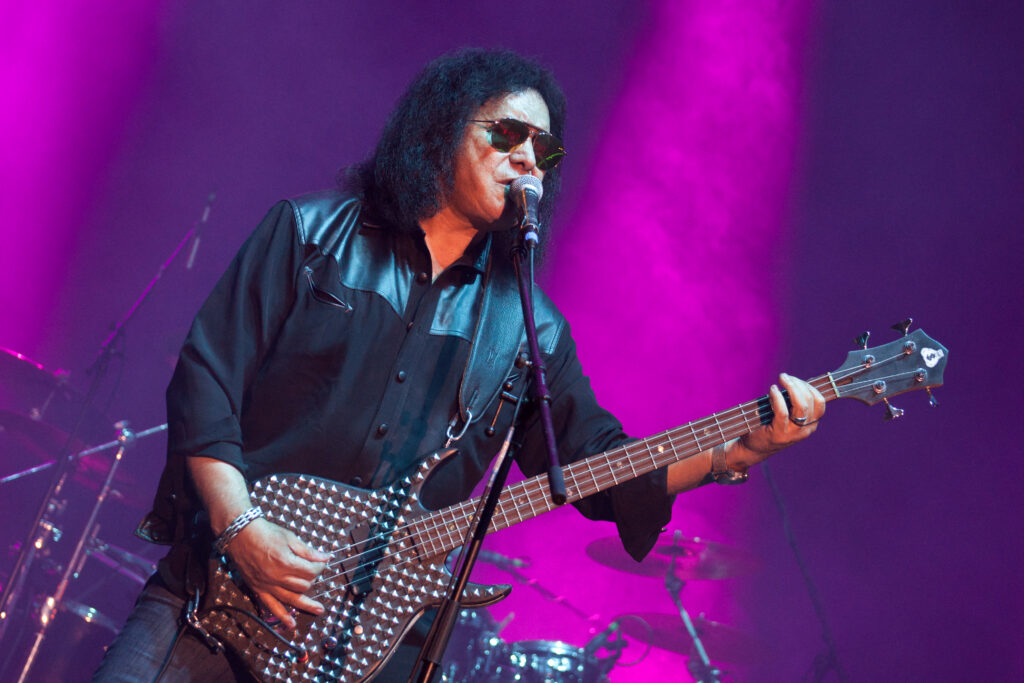
The bassist brought a lean, no-frills operation to the Indio, California venue on June 13.
Gene Simmons and his solo outfit, Gene Simmons Band, performed at Fantasy Springs Resort Casino in Indio, California on Saturday, June 13, running through a 14-song set drawn almost entirely from the KISS catalog. Fan-filmed video of the full concert was uploaded to YouTube by Knucklebutt_FavBands, giving fans who missed the show a complete look at the evening.
The Band and the Lineup
Gene Simmons Band features Simmons on bass and vocals, Jason Walker on guitar and vocals, Brian Tichy on drums and vocals, and Brent Woods on guitar. The configuration keeps things compact by design, with every member capable of handling lead vocal duties.
Simmons has been candid about the appeal of the format. In a recent interview with Whittier Daily News, he described his bandmates as ‘killers’ and emphasized the group’s flexibility: ‘We don’t have a manager. There are no trucks, no nothing. We just set up and play. We have the flexibility of doing requests someone may yell out. Or if we’re asked if we know Tush by ZZ Top, we’ll look at each other, it’s the key of G, let’s go and boom, you’re off to the races.’
Full Setlist from the Indio Show
According to Setlist.fm, the 14-song set at Fantasy Springs Resort Casino was as follows:
- Deuce (KISS song)
- Shout It Out Loud (KISS song)
- War Machine (KISS song)
- Calling Dr. Love (KISS song)
- Christine Sixteen (KISS song)
- I (KISS song)
- Spit (KISS song)
- I Love It Loud (KISS song)
- Domino (KISS song)
- Charisma (KISS song)
- Rocket Ride (KISS song)
- Cold Gin (KISS song)
- Parasite (KISS song)
- Rock And Roll All Nite (KISS song)
The Business Model Behind the Tour
Simmons has spoken openly about the financial logic underpinning the solo band operation. During an August 2024 appearance on Steve-O’s Wild Ride! podcast, he laid out the structure plainly: ‘I designed a business model that is just semi-genius. I show up with my guitar pick. That’s it. There’s no manager, no roadies, no trucks, no equipment. Everything is provided by the promoter. The flights, the hotels, all the amplifiers, the drums, everything is rented locally. That’s the promoter’s cost, and whatever six-figure or more amount there is, I pocket.’
He went further, arguing the arrangement actually outperforms his KISS earnings on a per-show basis: ‘I literally make more money per gig being Gene Simmons and the Gene Simmons Band than I did in KISS, not counting the ancillaries and all that, because you don’t have a 60-man crew, three double deckers, private jet that’s on call seven days a week and 20 to 24 tractor trailers.’
Beyond the economics, Simmons has pointed to creative freedoms the solo setting allows. In the Whittier Daily News interview, he noted plans to perform KISS material the band never played live and possibly songs that have never been recorded, adding that pulling fans from the audience to perform onstage is also on the table: ‘No rules.’
What we know
- Gene Simmons Band performed at Fantasy Springs Resort Casino in Indio, California on June 13.
- The band consists of Gene Simmons on bass and vocals, Jason Walker on guitar and vocals, Brian Tichy on drums and vocals, and Brent Woods on guitar.
- The Indio setlist contained 14 songs, all drawn from the KISS catalog, according to Setlist.fm.
- Simmons stated that the promoter covers all equipment, travel, and lodging costs, and that he pockets a six-figure or more amount per show.
- Fan-filmed video of the full concert was uploaded to YouTube by Knucklebutt_FavBands.
The take
The Gene Simmons Band model is worth examining beyond its novelty. KISS officially retired from touring following their End of the World farewell run, which concluded in late 2023, leaving Simmons and Paul Stanley without the machine they spent five decades building. For a legacy act of that scale, the transition to a stripped-down solo operation is a significant pivot, and Simmons has engineered it with characteristic shrewdness. The zero-overhead approach he describes, where the promoter absorbs all production costs, is essentially the opposite of how arena-era classic rock has traditionally worked. Historically, the biggest acts carried enormous touring infrastructure as a point of pride and spectacle; KISS was among the most extreme examples, with pyrotechnics, elaborate staging, and massive crew counts defining their brand. Running a lean four-piece that can drop into a casino ballroom and play deep KISS cuts on request is a different proposition entirely, but it taps into something real: the demand for intimate classic rock performances has grown steadily as the arena-show era winds down for many legacy acts. Brian Tichy, notably, is a veteran of Whitesnake and Foreigner among others, so the musicianship on the stage is not a compromise. Whether this format expands into larger venues or remains a boutique operation remains to be seen, but as a post-KISS chapter for Simmons, it appears to be working on his own terms.
Why it matters
For classic rock fans, the Gene Simmons Band represents one of the few ways to see KISS-era material performed live now that the band has officially retired. The casino and smaller-venue circuit has become an increasingly important space for legacy rock acts, offering accessibility that arena tours never could. Simmons’s willingness to take requests, pull fans onstage, and perform rarely heard KISS songs gives these shows a spontaneity that the choreographed spectacle of a KISS production never allowed. That trade-off is meaningful for a fanbase that has followed the band for decades.
What’s next
No additional Gene Simmons Band tour dates were listed in the available reporting. Simmons has indicated the band intends to perform KISS material that was never played live and possibly songs that have never been recorded, suggesting the setlists may continue to evolve at future appearances.
Frequently asked questions
Who is in Gene Simmons Band?
The band consists of Gene Simmons on bass and vocals, Jason Walker on guitar and vocals, Brian Tichy on drums and vocals, and Brent Woods on guitar.
Where did Gene Simmons Band perform on June 13?
Gene Simmons Band performed at Fantasy Springs Resort Casino in Indio, California.
What songs did Gene Simmons play in Indio?
According to Setlist.fm, the 14-song set included Deuce, Shout It Out Loud, War Machine, Calling Dr. Love, Christine Sixteen, I, Spit, I Love It Loud, Domino, Charisma, Rocket Ride, Cold Gin, Parasite, and Rock And Roll All Nite, all KISS songs.
How does Gene Simmons make money with his solo band?
Simmons has explained that the promoter covers all costs including equipment, flights, and hotels, while he pockets a six-figure or more amount per show with no overhead of his own.
Where can I watch video of the Gene Simmons Band Indio concert?
Fan-filmed video of the full concert was uploaded to YouTube by Knucklebutt_FavBands.
Related coverage
TOP STORIES
RELATED ARTISTS

Related Stories
Fleetwood Mac Documentary ‘The Chain’ Gets Title and Release Date
Fleetwood Mac: The Chain, the band’s first fully authorized documentary, arrives on Apple TV on January 29, 2027, coinciding with the 50th anniversary of Rumours.
John Anderson, ‘Swingin” and ‘Seminole Wind’ Singer, Dies at 71
John Anderson, the Country Music Hall of Fame singer behind “Swingin'” and “Seminole Wind,” has died at age 71, only days after taking part in Nashville’s 2026 Medallion Ceremony.
Judas Priest Locks In First Confirmed 2027 US Tour Date at Boardwalk Rock
Judas Priest has confirmed its first US concert of 2027, a slot on the Iron Maiden-headlined Sunday bill at the Boardwalk Rock festival in Ocean City, Maryland.
Robert Plant Opens Up on Son Karac’s 1977 Death and His Quiet Life Today
In a new Sunday Times interview, Robert Plant describes how the 1977 death of his five-year-old son Karac altered his attachment to Led Zeppelin, and shares details of his present-day life in a small Worcestershire village.
Bon Jovi Extends 2027 Stadium Dates, Expanding Forever Tour to Australia, UK and North America
Bon Jovi is expanding its Forever Tour with seven new 2027 stadium shows spanning Australia, the UK and North America, building on sold-out dates at Madison Square Garden and Wembley Stadium earlier this year.
Motley Crue Sets 2027 ‘Carnival of Sins in Sin City’ Residency at Caesars Palace
Motley Crue has unveiled an eight-show Las Vegas residency, ‘Carnival of Sins in Sin City,’ set for The Colosseum at Caesars Palace from March 19 to April 3, 2027.
Led Zeppelin Lets ‘Stairway to Heaven’ Soundtrack a Movie Trailer for the First Time, for Greta Gerwig’s Narnia Film
Led Zeppelin has granted permission for ‘Stairway to Heaven’ to appear in a film for the first time, backing the debut trailer for Greta Gerwig’s Narnia: The Magician’s Nephew.
Cheap Trick 2027 Concert Dates Announced
Cheap Trick has booked its first three concert dates for 2027, set for February and April, as the band’s ongoing All Washed Up Tour continues through the fall of 2026.
Judas Priest’s Ian Hill Retires After 57 Years, Longest-Serving Member
Judas Priest founding bassist Ian Hill has stepped away from the band after 57 years, citing worsening arthritis and a torn shoulder tendon, with Uriah Heep’s Davey Rimmer set to take his place on bass starting with the band’s 2027 touring.